Blog POST
10 On-Page SEO Strategies to Improve Rankings in 2026
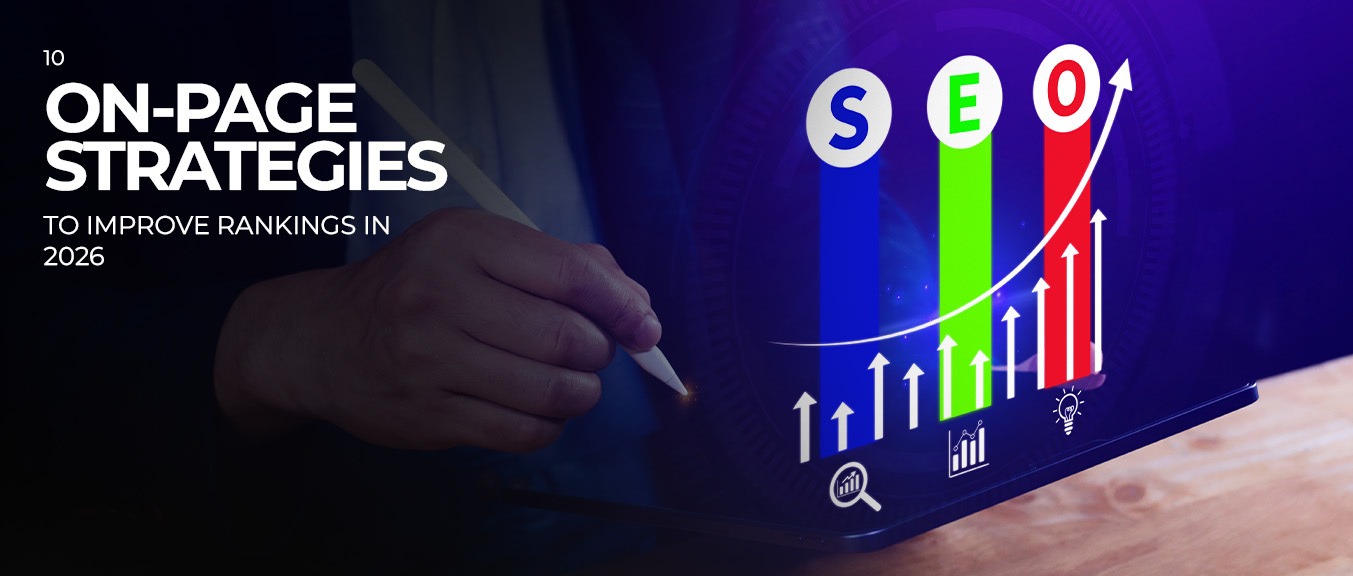
On-page SEO services are the foundation of any successful digital marketing strategy. In 2026, search engines have become smarter, emphasizing content relevance, user experience, and technical optimization. Businesses that invest in comprehensive on-page SEO services in the USA gain a competitive edge, improved rankings, and higher organic traffic.
By optimizing meta titles, descriptions, headings, images, and internal links, your website becomes more search-engine friendly. From startups to large enterprises, every website can benefit from professional on-page SEO services. This guide will share 10 actionable strategies to enhance your website performance, boost CTR, and attract qualified leads.
1. Optimize Meta Titles & Descriptions
Meta titles and descriptions are your website’s first impression in search results. Using on-page SEO services, you can craft compelling, keyword-rich meta titles like “On-Page SEO Services in USA” while keeping them under 60 characters.
Descriptions should be 150–160 characters, summarizing the page content and including target keywords naturally. For example, integrating variations such as “SEO content optimization services” or “meta tag optimization services” helps Google understand page context while improving click-through rates. Regularly updating meta tags ensures your website stays competitive in search rankings.
2. Header Tags & Structured Content
Proper H1, H2, and H3 structure organizes content for readers and search engines. On-page SEO services focus on placing primary keywords in H1s and variations like “website SEO services USA” or “technical on-page SEO” in H2s/H3s.
This improves content readability, relevance, and topical authority. Structured content also allows for snippet opportunities in Google search, enhancing visibility. Using bullet points, numbered lists, and concise paragraphs increases engagement while maintaining SEO best practices.
3. Keyword Mapping & Strategic Placement
Keyword placement is crucial for SEO success. On-page SEO services create a keyword map, ensuring each page targets unique focus keywords without duplication.
Main keywords like “on page SEO services” should appear 8–9 times naturally, while variations such as “page structure optimization” and “SEO-friendly content services” are included in headings, body, and alt tags. Overuse or stuffing is avoided, keeping content natural for readers and compliant with Google guidelines.
4. Image Optimization & Alt Text
Images enhance user experience, but unoptimized images slow down your site. On-page SEO services ensure images are compressed, properly formatted, and include descriptive alt text.
Alt texts include focus keywords naturally, e.g., “SEO content optimization services diagram” or “on-page SEO workflow USA.” Optimized images improve page speed, accessibility, and relevance, contributing to higher rankings and better engagement metrics.
5. Internal Linking & Authority Flow
Internal linking helps Google crawl your site efficiently while distributing authority. Linking “on page SEO services” pages to related services like “custom WordPress development” or “UI/UX design services” boosts overall SEO performance.
Use contextual anchor texts like “on-page SEO optimization USA” or “meta tag optimization services” to guide users and search engines. This strategy increases dwell time, reduces bounce rates, and enhances SERP rankings.
6. Mobile Optimization & Page Speed
Mobile-first indexing makes responsive design critical. On-page SEO services optimize mobile layout, font sizes, and touch elements for better usability.
Page speed improvements, including image compression, caching, and minified CSS/JS, increase user satisfaction. Keywords like “technical on-page SEO” and “SEO-friendly content services” naturally appear in mobile headings, ensuring seamless experience across devices.
7. Content Quality & Relevance
High-quality content is key to retaining visitors and improving rankings. On-page SEO services help create comprehensive, informative pages targeting keywords like “website SEO services USA” and “page structure optimization.”
Use FAQs, examples, and real case studies to increase user engagement. Variations such as “SEO content optimization services” and “meta tag optimization services” are sprinkled naturally to improve semantic relevance. Google rewards content that satisfies user intent with higher visibility.
8. Schema Markup & Rich Snippets
Schema markup allows search engines to understand page content context. On-page SEO services implement structured data for articles, FAQs, and products, improving chances of rich snippets.
Adding schemas for “on page SEO services in USA” and related keywords boosts CTR while providing enhanced visibility in SERPs. Rich snippets also increase user trust and click-through potential.
9. Monitoring & Analytics
Performance tracking is essential. Tools like Google Search Console, Ahrefs, SEMrush, and PageSpeed Insights help monitor rankings, CTR, and traffic.
On-page SEO services use these insights to tweak keywords, meta tags, internal links, and content for continuous improvement. Keyword variations like “SEO-friendly content services” or “technical on-page SEO” can be emphasized in low-performing sections to maximize impact.
10. Continuous Updates & Optimization
SEO is an ongoing process. On-page SEO services recommend quarterly audits to update content, meta information, and technical fixes.
Regular optimization ensures your “on page SEO services” pages stay relevant, competitive, and aligned with Google’s evolving algorithms. Using natural variations like “SEO content optimization services” keeps content fresh, improving rankings and user experience consistently.
FAQs (Helpful & Complete)
1. What are On-Page SEO Services?
On-Page SEO Services involve optimizing every element on your website that affects search engine rankings. This includes meta titles, meta descriptions, headings (H1-H6), content, images, URL structure, internal links, and schema markup. The goal is to make your site both search-engine and user-friendly to improve visibility and engagement.
2. Why are On-Page SEO Services important for my website?
They help search engines understand your content, improve user experience, and increase organic traffic. Proper on-page SEO ensures higher rankings, better click-through rates, and more conversions without relying solely on paid ads.
3. How long does it take to see results from On-Page SEO?
Results usually start showing in 4–12 weeks, depending on your website’s size, competition, and optimization scope. Continuous monitoring and updates improve performance over time.
4. Can small businesses benefit from On-Page SEO Services?
Yes! Small businesses can compete with larger competitors by optimizing pages for target keywords, improving local SEO visibility, and attracting ready-to-buy customers. On-page SEO is essential for startups to build a strong foundation.
5. What elements are included in On-Page SEO optimization?
Key elements include:
-
Meta titles and descriptions
-
Header tags (H1-H6)
-
URL structure and slugs
-
Keyword placement and variations
-
Internal linking
-
Image optimization (alt tags, sizes)
-
Page speed and mobile responsiveness
-
Schema markup for rich results
6. How do you choose keywords for On-Page SEO?
We perform in-depth keyword research using tools like Ahrefs, SEMrush, and Google Search Console. Focus is on high-value, low-competition keywords relevant to your business and target audience. Keyword variations are naturally incorporated into headings, content, and meta tags.
7. Will On-Page SEO improve mobile and page speed performance?
Yes. On-Page SEO includes optimizing your site for mobile devices, improving load speed, and ensuring smooth navigation, which enhances both user experience and rankings on Google’s mobile-first index.
8. How often should On-Page SEO be updated?
We recommend reviewing and updating content, meta tags, and internal links every 3–6 months. SEO trends and algorithms change, so regular updates ensure your website remains competitive.
9. Does On-Page SEO work with existing content?
Absolutely. Existing pages can be optimized by rewriting content, updating headings, adding internal links, improving meta tags, and enhancing technical elements. This improves both rankings and user engagement without creating new pages.
10. Can On-Page SEO reduce dependency on paid ads?
Yes. By increasing organic visibility, attracting qualified traffic, and improving rankings, businesses can rely less on paid advertising over time while maintaining consistent leads and conversions.
Jacq360 turns ideas into results with tailored, data-driven digital marketing and e-commerce technology solutions.
Contact Info
- +92 303 2358999
- info@jacq360.com
- Quaid-E-Azam Industrial Estate,Kot Lakpat,Township, Lahore Punjab
- 2026
- JACQ360 Digital Marketing Agency. All rights reserved.
Useful Info
Subscribe to Our Newsletter
Sign up for my newsletter to get latest updates. Do not worry, we will never spam you.